.webp)



Six Essential Steps to Start Your Own Diagnostic Centre
Starting a diagnostic centre requires careful planning and a clear understanding of the steps involved. Before investing in equipment or selecting a location, it is important to create a structured plan that matches your services, budget, and business goals.
This guide outlines the six essential steps involved in establishing a diagnostic centre.
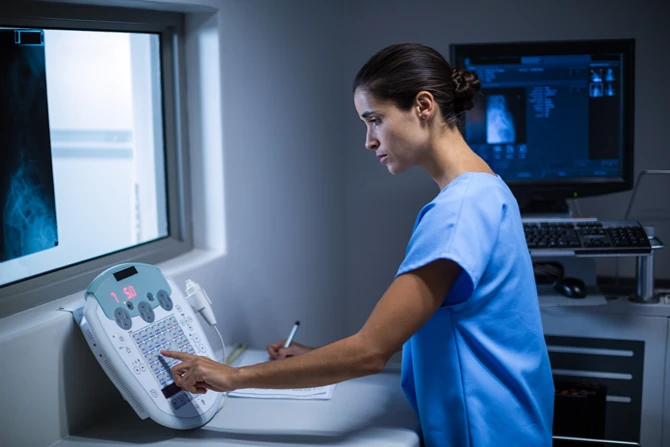
Step 1: Decide the Type of Diagnostic Centre
The first step is to determine the type of services your diagnostic centre will provide. This decision forms the foundation for every other aspect of your project. The service options include:
- Laboratory Services – Blood and urine investigations.
- Allied Diagnostic Services – Services such as ECG, TMT, and X-ray.
- Complete Imaging Services – Imaging-based diagnostic facilities.
A laboratory can function independently, while allied diagnostic services are generally planned along with laboratory or imaging services. Defining your services at the beginning helps in planning the remaining stages of the project.
Step 2: Prepare an Investment Plan
Once the services are finalized, the next step is to estimate the investment required. Your financial plan should include the expected cost of setting up the selected services and purchasing the required equipment. Having a clear budget helps you manage expenses effectively and prevents unnecessary overspending during the project.
The investment plan should always be prepared based on:
- The type of diagnostic centre
- Your business vision
- Your target customers
Step 3: Select the Right Location

The location of your diagnostic centre should be chosen according to your target audience.
If your business primarily depends on referrals from doctors, establishing the centre near a medical hub can be beneficial.
If you plan to attract direct walk-in patients, choosing a highly visible location with good public access becomes more important. Selecting the right location plays a significant role in the long-term success of the centre.
Step 4: Determine the Space Requirement
The space required depends entirely on the services you plan to offer. A laboratory providing only routine pathology services requires a different layout compared to a centre offering imaging facilities.
If imaging services are included, the facility should be planned according to the applicable regulatory requirements. Therefore, the space requirement should always be decided after finalizing the service offerings.
Step 5: Complete the Required Licences
Licensing requirements vary depending on the type of diagnostic centre being established. For a laboratory performing blood and urine investigations, the required licences differ from those needed for imaging services. For example:
- Imaging services such as X-ray require the appropriate regulatory certification.
- Ultrasound services require the mandatory certification applicable to that service.
Before starting operations, it is important to identify and obtain all licences required under the relevant state and government regulations.
Step 6: Select the Right Equipment
After finalizing the services and licences, the next step is choosing the equipment. While selecting equipment, it is important to compare different manufacturers, understand available combinations of machines, and choose equipment that best supports the planned diagnostic services.
The equipment should provide the required testing capability while remaining within the planned investment budget. Since equipment delivery may take several weeks after placing the order, this period can be used to complete other preparations, such as:
- Recruiting staff
- Planning the laboratory rate card
- Completing civil and interior work
- Finalizing operational arrangements
A Quick Recap
The six essential steps for establishing a diagnostic centre are:
- Decide the type of diagnostic centre and services.
- Prepare a detailed investment plan.
- Choose the right location.
- Plan the required space.
- Obtain the necessary licences.
- Select the right equipment at the right price.
Conclusion
Establishing a diagnostic centre becomes much more manageable when approached in a systematic manner. Beginning with service planning, followed by budgeting, location selection, space planning, licensing, and equipment selection, helps create a clear roadmap for setting up the centre.
A well-planned approach allows every stage of the project to be completed in an organized and practical manner, laying the foundation for a successful diagnostic centre.